Author: SGTenizo

  • Welcoming 2026 With Hope

    Welcoming 2026 With Hope

    3 Ways to draw closer to God in 2026

    As the final days of 2025 slip quietly into memory, many of us feel that familiar mixture of anticipation and reflection. A new year always carries a certain weight—fresh pages waiting to be written, new mercies waiting to be received. For Christians, the turning of the calendar is more than a cultural milestone. It’s an invitation. A holy pause. A chance to realign our hearts with the One who holds all our days.

    So how do we welcome 2026 positively, faithfully, and intentionally? Here are three deeply Christian postures that can shape the year ahead: personal spiritual growth, community involvement, and above all, drawing closer to God.

    1. Begin With Personal Spiritual Growth

    New Year’s resolutions often focus on productivity, fitness, or finances. These can be good, but Scripture reminds us that the most important growth happens within.

    “But grow in the grace and knowledge of our Lord and Savior Jesus Christ.” — 2 Peter 3:18

    Spiritual growth isn’t about perfection—it’s about direction. It’s about choosing, day by day, to orient your life toward Christ.

    Here are a few ways to cultivate that growth in 2026:

    • Establish a sustainable rhythm of Scripture reading. Not a sprint, but a steady walk. Choose a plan that fits your life, not someone else’s.
    • Deepen your prayer life. Try journaling your prayers, praying through Psalms, or setting small “prayer pauses” throughout your day.
    • Practice spiritual disciplines intentionally. Silence, fasting, Sabbath rest, generosity—these practices shape us into people who look more like Jesus.
    • Reflect regularly. Take time each week to ask: Where did I see God? Where did I resist Him? Where do I need His grace?

    Growth is slow, sacred work. But over time, it transforms everything.

    2. Recommit to Community and Service

    Christianity is never a solo journey. The early church thrived because believers shared life, resources, burdens, and joy. In a world that often pushes us toward isolation, choosing community is a countercultural act of faith.

    “And let us consider how we may spur one another on toward love and good deeds.” — Hebrews 10:24

    As 2026 begins, consider:

    • Re-engaging with your local church. Not just attending, but participating—showing up with presence, vulnerability, and love.
    • Serving in a ministry or outreach. Whether it’s mentoring youth, visiting seniors, supporting newcomers, or helping with hospitality, your gifts matter.
    • Practicing everyday kindness. Community isn’t only formal ministry. It’s noticing people. Listening well. Encouraging freely. Being available.
    • Building rhythms of fellowship. Small groups, prayer partners, shared meals—these are the places where faith becomes embodied.

    When we invest in community, we reflect the heart of Christ, who never walked alone and never left anyone behind.

    3. Above All, Draw Closer to God

    If there is one resolution worth making this year, it is this: to know God more deeply.

    Not simply to know about Him, but to know Him—His character, His voice, His presence, His love.

    “Come near to God and he will come near to you.” — James 4:8

    This is the promise that anchors every Christian hope for the new year. God is not distant. He is not waiting for us to achieve spiritual milestones before He draws close. He is already near, inviting us into deeper communion.

    To draw closer to God in 2026:

    • Seek Him with honesty. Bring your doubts, your hopes, your fears. God meets us in truth, not performance.
    • Worship with your whole life. Not just in song, but in work, rest, relationships, and decisions.
    • Look for God in the ordinary. In conversations, in creation, in quiet moments, in unexpected blessings.
    • Trust Him with the unknown. A new year always brings uncertainty, but God’s faithfulness is not seasonal.

    The more we know God, the more we become who we were created to be.

    Stepping Into 2026 With Hope

    The new year doesn’t need to be overwhelming. You don’t need a long list of resolutions or a flawless plan. What you need is a posture—a heart turned toward God, open to His leading, willing to grow, serve, and trust.

    As 2026 dawns, may you:

    • Walk in grace
    • Grow in wisdom
    • Love your community well
    • And experience God more deeply than ever before

    The year ahead is unknown to us, but He is with us. And that is the greatest comfort of all.
  • Joint Heirs

    Joint Heirs

    Equal Standing in Abraham’s Promise

    Understanding God’s Choice, the Covenant Story, and the Identity of Abraham’s Descendants Today

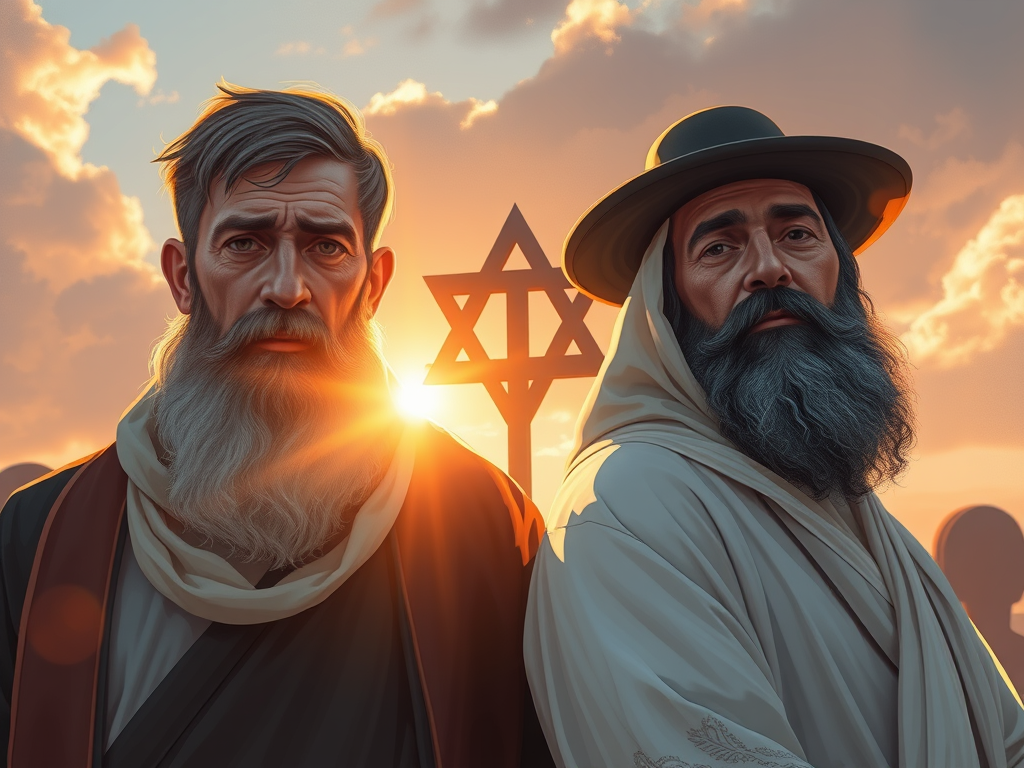
    Few biblical stories raise as many questions as the choice between Jacob and Esau. Why did God choose the younger brother? What was the purpose behind this reversal? And how does this ancient decision shape the identity of the Jewish people—and the identity of Gentile believers today?

    This story is not about favoritism or arbitrary preference. It is about God’s redemptive purpose, the unfolding of the Abrahamic covenant, and the way God brings both Jews and Gentiles into His family.

    Let’s explore the story in three movements:

    1. The covenant blessing Jacob received
    2. The divine reason for God’s choice
    3. The identity of Jacob and Esau’s descendants today
    4. How Gentile believers share in Abraham’s blessing—and how this relates to the Jewish people

    1. The Covenant Blessing Jacob Received

    Jacob was chosen to inherit the full weight of the Abrahamic covenant, the foundational promise God made to Abraham and reaffirmed to Isaac.

    This covenant included:

    A. A People

    Jacob becomes the father of the twelve tribes of Israel, the covenant nation through whom God would work in the world.

    B. A Land

    The land of Canaan was promised to Abraham’s descendants. God personally reaffirms this promise to Jacob at Bethel.

    C. A Mission of Blessing

    Through Abraham’s line, “all nations of the earth will be blessed.” This blessing ultimately points to the Messiah.

    D. God’s Presence

    God promises Jacob, “I am with you… I will not leave you,” echoing the covenantal presence given to Abraham and Isaac.

    In short:

    Jacob was chosen to carry forward the covenant people, the covenant land, the covenant mission, and the covenant promise of the Messiah.

    2. Why Did God Choose Jacob Instead of Esau?

    The biblical narrative gives several clear reasons.

    A. God declared His choice before the twins were born

    Rebekah receives a divine oracle:

    “The older will serve the younger.” — Genesis 25:23

    This reversal of cultural norms shows that God’s choice was rooted in His own purpose, not human custom or merit.

    B. The choice was not based on Jacob’s moral superiority

    Jacob’s early life is full of deception and manipulation. Scripture never hides this.

    But Esau, Scripture says, despised his birthright (Genesis 25:34). He treated lightly what God had declared sacred.

    The point is not that Jacob was better. The point is that God’s choice was not based on human merit at all.

    C. The choice served God’s redemptive plan

    Jacob was chosen because the messianic line—the line leading to Jesus—would come through him.

    This is the theological center of the story.

    D. The choice reveals God’s freedom in directing the covenant story

    Paul uses this story in Romans 9 to illustrate God’s freedom to shape the covenant narrative.

    God chooses Jacob because the covenant must continue, and Jacob is the one through whom the promise will unfold.

    3. Who Are Jacob and Esau’s Descendants Today?

    Understanding their descendants helps modern readers see the story with clarity.

    A. Jacob’s Descendants Today

    Jacob’s name was changed to Israel, and his descendants became:

    • The Israelites
    • The Jewish people

    Modern Jews trace their identity—historically, culturally, and often genetically—to Jacob and the twelve tribes of Israel.

    So:

    Jacob’s descendants today are the Jewish people and the broader historical nation of Israel.

    B. Esau’s Descendants Today

    Esau is also called Edom, and his descendants are known as the Edomites.

    Historically:

    • They lived in what is now southwestern Jordan, between the Dead Sea and the Gulf of Aqaba
    • Later, some migrated into southern Israel/Negev, known as Idumea

    Over time, through conquest and assimilation, the Edomites ceased to exist as a distinct people group.

    So:

    Esau’s descendants today are historically associated with the ancient Edomites of Jordan and the Negev.

    4. Gentile Believers and Jewish Believers:

    Do They Have Equal Standing Before God? Are They Joint Heirs?

    Paul says in Galatians 3:

    “If you belong to Christ, then you are Abraham’s seed, heirs according to the promise.”

    This means:

    • You are not ethnically Jewish
    • You do not replace the Jewish people
    • But you are fully included in the Abrahamic blessing through Christ

    Let’s break this down.

    A. Jewish People: Abraham’s Seed by Lineage and Covenant History

    Jewish identity is rooted in:

    • Biological descent from Abraham, Isaac, and Jacob
    • National covenant (land, Torah, peoplehood)
    • Historical role in salvation (Scripture, prophets, Messiah)

    Paul says this covenant is irrevocable (Romans 11:29).

    B. Gentile Believers: Abraham’s Seed by Faith in the Messiah

    Gentile believers are not Abraham’s descendants by blood, but by union with Christ, the true Seed of Abraham.

    Paul describes this as being grafted in to Israel’s covenant blessings (Romans 11).

    You do not become Jewish. You do not replace Israel. But you become a full heir of the spiritual promises.

    C. Equal Merit Before God

    Yes. Absolutely. Without qualification.

    Paul says:

    “There is no Jew or Gentile… for you are all one in Christ Jesus.” — Galatians 3:28

    This does not erase Jewish identity. It does not erase Gentile identity. It means equal standing before God.

    Equal access. Equal grace. Equal adoption. Equal inheritance.

    D. Joint Heirs According to the Promise

    Paul uses this exact language:

    “Heirs together with Israel.” — Ephesians 3:6

    This is one of the most radical statements in the New Testament.

    It means:

    • Jewish believers and Gentile believers stand side by side
    • Both receive the promises of Abraham
    • Both are full members of God’s family
    • Both share in the inheritance of Christ

    Not two classes of believers. Not two tiers of covenant membership. One family in the Messiah.

    Conclusion: One Story, One Messiah, One Family

    The story of Jacob and Esau is not about favoritism. It is about purpose.

    Jacob was chosen to carry the covenant line. Esau was not chosen for that role. Israel remains God’s chosen people in history. Gentile believers are God’s chosen people in Christ.

    And in the Messiah, God brings both together:

    • One olive tree
    • One family
    • One inheritance
    • One hope

    So, if you are a Gentile believer, you are truly Abraham’s seed—fully included, fully loved, fully heir to the promise.

  • Hebrew Idioms: Love, Hate, and Biblical Meaning

    Hebrew Idioms: Love, Hate, and Biblical Meaning

     “Jacob I Loved, Esau I Hated” — What Does This Mean?

    In my blog post “The Seven Behaviours God Rejects”, I included a brief word study of “hate” as used in Proverbs 6:16-19.  If you want to revisit the blog post, click here. To gain a deeper understanding, let’s highlight two occurrences of the word in both Testaments of the Bible. These two passages are among the most misunderstood in Scripture, and they’re also two of the clearest windows into how Hebrew “love/hate” language works in covenant contexts.

    This line appears in Malachi 1:2–3, and Paul quotes it in Romans 9:13. At first glance, it sounds like God has emotional hostility toward Esau. But the Hebrew idiom — and the context — point in a different direction.

    A. The context is covenant, not emotion

    Malachi’s audience is Israel, who doubts God’s love. God responds by pointing to His choice of Jacob’s line over Esau’s. The contrast is about God’s covenantal selection, not emotional contempt.

    In other words:

    • “Jacob I loved” = I chose Jacob’s line for covenant blessing.
    • “Esau I hated” = I did not choose Esau’s line for that covenant role.

    This is reinforced by the historical outcome Malachi mentions: Edom (Esau’s descendants) experienced judgment and desolation, while Israel (Jacob’s descendants) received covenant promises.

    B. “Hate” = reject, not despise

    The Hebrew verb śānēʾ can mean “to hate,” but in covenant contexts it often means:

    • to reject
    • to not choose
    • to set aside in favor of another

    This is the same idiom used in Genesis 29, where Leah is “hated” (i.e., less loved, not preferred) compared to Rachel.

    So “Esau I hated” does not mean:

    • God despised Esau
    • God emotionally loathed him
    • God condemned him before birth

    It means:

    God sovereignly chose Jacob’s line for the covenant mission, and Esau’s line was not chosen for that role.

    C. Paul uses the phrase the same way

    In Romans 9, Paul cites Malachi to illustrate God’s freedom to choose how the covenant story unfolds, not to make a statement about Esau’s personal salvation (as many have proposed).

    Jesus’ “Hate Father and Mother” — What Is He Saying?

    In Luke 14:26, Jesus says:

    “If anyone comes to me and does not hate father and mother… he cannot be my disciple.”

    This is one of the strongest examples of Hebrew idiom carried into Greek.

    A. Jesus is using the same “love/hate” contrast

    Jesus is not commanding emotional hostility toward family. He is using the same covenant idiom found in the Old Testament:

    • “Love” = choose, prioritize, align with
    • “Hate” = choose second, not prioritize, not align with above the first

    This idiom is well-attested in Jewish teaching and matches how “hate” is used in the Jacob/Esau contrast.

    B. Matthew clarifies the meaning

    Matthew’s parallel passage says:

    “Anyone who loves father or mother more than me is not worthy of me.” (Matthew 10:37)

    Matthew interprets Jesus’ idiom for a Greek-speaking audience:

    • “Hate” = “love less than”
    • “Hate” = “not give ultimate allegiance to”

    C. Jesus is demanding ultimate allegiance

    In the first-century Jewish world, family loyalty was the strongest social bond. Jesus is saying:

    Your allegiance to me must be greater than even your deepest natural loyalties.

    This is not emotional rejection — it is discipleship priority.

    How These Two Passages Illuminate Each Other

    Both passages use the same Hebraic idiom:

    • “Love” = choose, embrace, align with
    • “Hate” = not choose, not prioritize, reject in favor of another

    In Malachi:

    • God “loves” Jacob = chooses Jacob’s line
    • God “hates” Esau = does not choose Esau’s line

    In Luke:

    • To “hate” family = to choose Jesus above them
    • To “love” Jesus = to give Him ultimate allegiance

    Neither passage is about emotional hostility.

    Both are about covenantal choice and relational priority.

    How This Connects Back to Proverbs 6

    The Proverbs 6:16-19 post explores how God “hates” certain behaviors — meaning He stands in settled moral opposition to them.

    These two passages reinforce that:

    • God’s “hate” is not emotional volatility
    • It is covenantal, moral, relational stance
    • It reflects His character and His purposes

    And Jesus’ use of the idiom shows that this linguistic pattern continues into the New Testament.

  • The Seven Behaviors God Rejects

    The Seven Behaviors God Rejects

    Proverbs 6:16–19 is one of the most direct ethical snapshots in the entire book. It doesn’t whisper wisdom; it names what God actively opposes. Not because God is irritable or easily provoked, but because these behaviors unravel the very fabric of the community He intends.

    The passage lists seven things the Lord “hates” — a word that deserves careful attention — and together they form a kind of moral anatomy, tracing how a disordered heart expresses itself in the world.

    Before we walk through the list, it’s worth pausing on that word.

    Word Study: What Does “Hate” Mean Here?

    When English readers hear “hate,” we often imagine intense emotion — disgust, rage, or hostility. But the Hebrew verb used in Proverbs 6:16 is שָׂנֵא (śānēʾ)**, and its meaning is deeper, steadier, and more covenant-shaped than our modern usage.

    1. English “hate” is mostly emotional.

    It describes a feeling — often volatile, reactive, or psychological.

    2. Hebrew śānēʾ is moral, relational, and volitional.

    It signals a settled stance of opposition, not a passing mood. When God “hates” something, it means:

    • He refuses to align with it
    • It is incompatible with His character
    • It damages the covenant community
    • It stands in direct contrast to what is good, just, and life-giving

    This is why Scripture can command us to “hate evil” — it’s about moral allegiance, not emotional hostility.

    3. “Love” and “hate” often function as covenant terms.

    In the Hebrew Bible, “love” and “hate” can describe choosing or rejecting, embracing or standing against. So when Proverbs says God “hates” these seven things, it means:

    God has taken a clear, unwavering stance against behaviors that deform people and destroy community.

    4. The pairing with “abomination” intensifies the point.

    The verse continues: “Yes, seven are an abomination to Him.” This word signals what is utterly incompatible with God’s holiness. Together, the two terms communicate:

    These behaviors are fundamentally out of alignment with who God is and what God is building.

    With that lens in place, the list becomes more than moral warnings — it becomes a window into God’s character and the kind of life wisdom invites us into.

    Here is the list of what God hates:

    1. Haughty Eyes —Pride as the Root

    The list begins with pride because pride is the soil where every other vice grows. “Haughty eyes” describe a posture of superiority — the quiet assumption that I am above correction, above others, or even above God’s wisdom.

    Pride blinds. It distorts self-perception and makes us unteachable. Wisdom begins with humility because humility keeps the heart open to truth.

    2. A Lying Tongue —Words That Bend Reality

    Once pride takes root, dishonesty follows. A lying tongue reshapes reality to protect the self — image, reputation, control. In Proverbs, truth is not merely a virtue; it is relational glue. Lies fracture trust, and trust is the foundation of every healthy community.

    3.Hands That Shed Innocent Blood —When Self-Interest Harms Others

    This phrase extends beyond physical violence. It includes any action that harms the vulnerable for personal gain. When pride and deceit go unchecked, they eventually justify harm. Wisdom insists that righteousness protects the innocent rather than exploiting them.

    4. A Heart That Plots Wicked Schemes —The Inner Workshop

    Before hands act, the heart imagines. In Hebrew thought, the heart is the control center — where desires, values, and plans are formed. A corrupted heart doesn’t stumble into wrongdoing; it strategizes it.

    Wisdom calls us to guard the imagination because imagination shapes action.

    5. Feet That Hurry to Evil —The Momentum of Habit

    This is eagerness, not accident. It’s the picture of someone who has become quick to do what is wrong — not hesitant, not conflicted, but swift. Sin becomes a practiced reflex.

    Wisdom slows us down. It teaches us to pause, discern, and choose the good before momentum carries us elsewhere.

    6. A False Witness —When Lies Become Weapons

    This is dishonesty with intent to harm. It’s the deliberate use of words to destroy someone’s reputation or standing. In biblical ethics, bearing false witness is one of the gravest violations because it attacks the very structure of justice.

    Truth is not just personal integrity — it is communal protection.

    7. One Who Sows Discord Among Brothers —The Final Breakdown

    The list ends with the most socially destructive behavior: intentionally creating division. This is the person who stirs conflict, spreads suspicion, and fractures unity.

    Unity in Scripture is not sameness; it is shared commitment to peace, justice, and mutual care. To sow discord is to work against the very thing God is building.

    The Pattern Behind the List

    These seven warnings are not isolated. They form a progression:

    • Pride distorts the self
    • Lies distort reality
    • Violence distorts justice
    • Schemes distort intention
    • Hastiness distorts discernment
    • False witness distorts truth
    • Discord distorts community

    At every stage, the movement is away from love — away from the kind of life that reflects God’s character.

    The Invitation of the Passage

    Proverbs doesn’t simply say, “Avoid these things.” It invites us to cultivate their opposites:

    • Humility instead of pride
    • Truth instead of deception
    • Protection instead of harm
    • Integrity instead of scheming
    • Discernment instead of impulsiveness
    • Honesty instead of false witness
    • Peace instead of division

    These virtues don’t just make us “better people.” They make us participants in God’s work of restoring relationships, communities, and the world.

  • Seven Things God Loves (Part 2)

    Seven Things God Loves (Part 2)

    Deepening Our Understanding of Divine Delight

    In Part 1, we explored seven things Scripture explicitly says God loves—truths that shape our theology and our lives. But the biblical witness is rich and layered. God’s love is not static or shallow; it pulses through relationships, character, and community. In this second reflection, we explore seven more things God loves, drawn from the broader sweep of Scripture.

    These are not abstract ideals—they are invitations to live in alignment with the heart of God.

    1. God Loves a Cheerful Giver

    2 Corinthians 9:7 God doesn’t just love generosity—He loves the spirit behind it. Giving that flows from joy, not obligation, reflects His own self-giving nature.

    Implication: Our generosity is not just a duty—it’s a reflection of divine joy.

    2. God Loves Mercy Over Sacrifice

    Hosea 6:6; Matthew 9:13 God prefers compassion to ritual. He delights in hearts that extend grace, not just hands that perform religious duties.

    Implication: Spiritual maturity is measured by mercy, not performance.

    3. God Loves Humility

    Isaiah 66:2; James 4:6 God draws near to the humble. He resists pride but delights in those who recognize their need and walk in dependence.

    Implication: Humility is not weakness—it’s the posture that opens us to divine presence.

    4. God Loves Unity Among His People

    Psalm 133:1; John 17:23 God delights when His children dwell in harmony. Unity reflects the relational nature of the Trinity and the reconciling work of Christ.

    Implication: Division grieves God; peacemaking honors Him.

    5. God Loves Truth in the Inward Being

    Psalm 51:6 God desires integrity—not just external obedience but inner honesty. He loves when our hearts are aligned with truth.

    Implication: Spiritual transformation begins with truthfulness before God.

    6. God Loves Those Who Keep His Commands

    John 14:21 Obedience is not legalism—it’s love expressed in action. God delights in those who respond to His love with faithful living.

    Implication: Following God’s ways is not burdensome—it’s relational.

    7. God Loves to Show Steadfast Love

    Micah 7:18; Exodus 34:6 God doesn’t just love—He loves to love. His steadfast love is not reluctant but overflowing, eager, and enduring.

    Implication: We are invited to trust in a love that never runs dry.

    My Take…

    These seven affirmations expand our vision of divine love. They show us that God’s delight is not limited to theological categories—it touches generosity, humility, unity, truth, and mercy. To love what God loves is to become more fully human, more deeply rooted, and more joyfully alive.

    Make sure your read Part 1.  Click here.

  • Seven Things God Loves

    Seven Things God Loves

    When Proverbs 6:16-19 lists seven things the Lord hates, it’s a striking moral mirror. But Scripture doesn’t only reveal what God rejects—it also reveals what God delights in. Understanding what God loves is just as important for shaping our character, our communities, and our spiritual imagination.

    Here are seven things (there are many more so I might do a Part 2)the Bible explicitly says God loves. Each one invites us into a way of life aligned with His heart.

    1. God Loves the World

    John 3:16 God’s love is not narrow or tribal. It stretches across the entire created order. This is the starting point of Christian theology: God’s posture toward the world is not disdain but love. His redemptive work flows from this foundational affection.

    Implication: We are called to see the world—not as disposable—but as beloved, worth caring for, healing, and engaging with hope.

    2. God Loves Sinners

    Romans 5:8 God’s love is not reserved for the deserving. He loves in the midst of rebellion, brokenness, and failure. This is the scandal of grace: God moves toward us before we move toward Him.

    Implication: We are freed from the illusion that we must earn divine affection. And we are challenged to extend grace to others in the same spirit.

    3. God Loves Those Who Love Him

    Proverbs 8:17 This is not a contradiction of grace but a relational truth. God delights in those who seek Him, who respond to His wisdom, who orient their lives toward Him.

    Implication: Love for God is not merely commanded—it is reciprocated. Our pursuit of God is met with divine joy.

    4. God Loves Justice and Righteousness

    Psalm 37:28; Psalm 11:7 God’s love is not sentimental. It is moral. He delights in what is right, equitable, and life-giving. Justice is not a political buzzword—it is a divine affection.

    Implication: To love what God loves means caring about fairness, truth, and the protection of the vulnerable.

    5. God Loves the Poor and the Sojourner

    Deuteronomy 10:18 God’s love bends toward the margins. He identifies with the fatherless, the widow, the immigrant, the outsider. His love is not abstract—it is embodied in advocacy and care.

    Implication: Our spirituality is incomplete if it does not include compassion for the vulnerable.

    6. God Loves the Righteous

    Psalm 146:8 God delights in those who walk faithfully, who live with integrity, who embody covenant loyalty. Righteousness is not perfection—it is alignment with God’s character.

    Implication: Our daily choices matter. God takes pleasure in lives shaped by goodness.

    7. God Loves His Covenant People

    Jeremiah 31:3 God’s love is not fickle. It is covenantal—rooted in promise, faithfulness, and enduring commitment. Israel’s story reveals a God who loves with persistence and patience.

    Implication: God’s love for His people today—Jew and Gentile in Christ—is grounded in the same steadfast character.

    My Take…

    If Proverbs 6 shows us what God hates because it destroys life, these seven truths show us what God loves because they reflect His heart. They are not merely theological statements—they are invitations. To love what God loves is to participate in His life-giving work in the world.