Author: SGTenizo

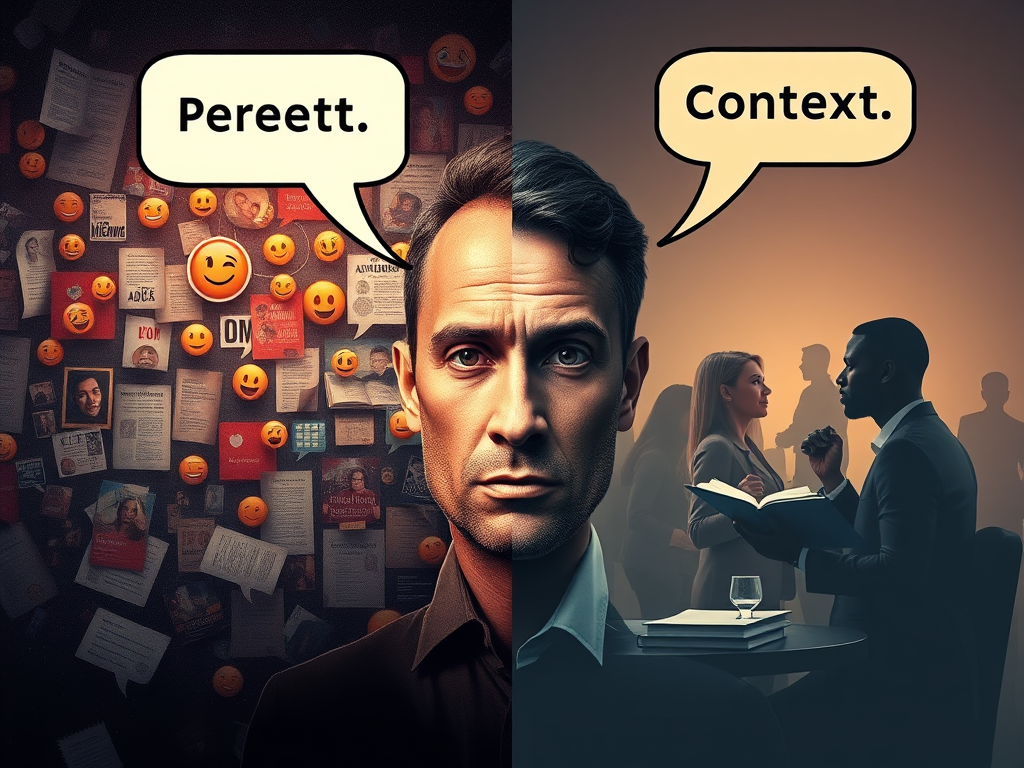
  • Pretext, Context, and How Truth Emerges

    Pretext, Context, and How Truth Emerges

    We live in an age of instant reactions. Headlines are shared before they are read. Quotes are reposted without verification. Outrage travels faster than understanding. In such a climate, truth is often the first casualty.

    To understand how truth emerges, we must first distinguish between pretext and context.


    1. What Is Pretext?

    A pretext is a selective presentation of information designed to provoke a specific reaction. It often appears in the form of:

    • A clipped quote without background
    • A headline crafted for emotional impact
    • A statistic stripped of its surrounding data
    • A narrative shaped to confirm bias

    Pretext thrives on immediacy. It does not invite reflection; it demands reaction.

    In politics, marketing, and even personal conflicts, pretext is often used to frame events in a way that serves an agenda. It narrows perception and guides interpretation before we’ve had a chance to think critically.


    2. What Is Context?

    Context is the broader framework that gives meaning to a statement, event, or action. It answers questions such as:

    • Who said this, and to whom?
    • What was happening at the time?
    • What came before and after?
    • What cultural, historical, or emotional factors are involved?

    Context does not rush. It slows us down. It forces us to consider nuance, complexity, and perspective.

    For example, a single verse taken from Scripture without its surrounding passage can be misapplied. Likewise, a statement taken from a speech without the full transcript can distort the speaker’s intent.

    Truth begins to emerge not in isolation, but in connection.


    3. The Tension Between Pretext and Context

    Pretext simplifies.
    Context clarifies.

    Pretext often appeals to emotion.
    Context appeals to understanding.

    Pretext divides.
    Context deepens discernment.

    When we operate only on pretext, we become vulnerable to manipulation. When we pursue context, we move closer to truth.

    This is particularly important in an era of rapid digital communication, where algorithms reward engagement rather than accuracy.


    4. How Truth Emerges

    Truth rarely shouts; it often unfolds.

    Here are four ways truth emerges responsibly:

    1. Through Patience

    Immediate conclusions are rarely accurate. Time reveals patterns, motives, and facts that initial reports may obscure.

    2. Through Cross-Verification

    Truth is strengthened when confirmed by multiple credible sources. One isolated claim demands scrutiny; consistent evidence invites confidence.

    3. Through Intellectual Humility

    We must admit the possibility that we may not have the full picture. Humility opens the door to correction and refinement.

    4. Through Dialogue

    Respectful conversation allows competing interpretations to be tested. Truth often sharpens in the presence of honest exchange.


    5. A Moral Responsibility

    The pursuit of context is not merely intellectual; it is ethical.

    To forward an article without reading it is careless.
    To condemn without investigation is unjust.
    To judge without listening is reckless.

    Truth demands diligence.

    In Scripture, wisdom literature consistently urges careful hearing before answering. Discernment requires listening beyond the surface.


    6. Becoming People of Context

    If we desire truth to emerge in our families, communities, and public life, we must:

    • Refuse to react solely on headlines
    • Ask clarifying questions
    • Seek primary sources
    • Resist emotional manipulation
    • Value truth more than winning arguments

    In doing so, we cultivate integrity.


    Conclusion

    Pretext is powerful because it is fast and emotionally compelling. Context is powerful because it is patient and illuminating.

    Truth does not thrive in fragments. It flourishes in fullness.

    In an age of noise, may we become seekers of context.
    In a culture of reaction, may we practice reflection.
    And in every matter, may we pursue truth—not the version that flatters us, but the one that withstands examination.

  • The Case For and Against Voter ID. What makes sense

    The Case For and Against Voter ID. What makes sense

    The debate over voter ID laws centers on one key tension: protecting election integrity while preserving broad access to voting. Below is a balanced look at both sides, followed by a practical analysis of what may best uphold both security and fairness.


    The Case For Voter ID Laws

    1. Preventing Voter Fraud

    Supporters argue that requiring identification helps prevent impersonation fraud (someone pretending to be another voter). Even if rare, they contend elections should be safeguarded the way banks or airports are.

    Example: States like Georgia and Indiana have long required photo ID for in-person voting and argue it strengthens verification procedures.

    2. Increasing Public Confidence

    Public trust is essential in a democracy. Even if fraud is uncommon, some argue that ID requirements reassure voters that elections are secure.

    After the disputed 2020 presidential election involving Donald Trump and Joe Biden, confidence in election integrity became a major political issue, particularly among Republican voters.

    3. ID Is Common in Daily Life

    Supporters note that ID is required for many everyday activities (boarding flights, opening bank accounts, purchasing certain goods). They argue voting—a civic act of great importance—should meet a similar standard.


    The Case Against Voter ID Laws

    1. Voter Fraud Is Extremely Rare

    Opponents argue that in-person voter impersonation—the type voter ID laws address—is statistically rare. Studies and investigations across multiple election cycles have allegedly found few proven cases.

    2. Disproportionate Impact

    Critics argue strict photo ID laws disproportionately affect:

    • Low-income individuals
    • Elderly voters
    • Rural residents
    • Minority communities

    Obtaining government-issued ID may require transportation, documentation (like birth certificates), fees, or time off work.

    3. Risk of Voter Suppression

    Opponents argue that even small barriers can discourage participation. Historically, policies framed as “election integrity” measures have sometimes been used to restrict voting access.

    The Supreme Court case Shelby County v. Holder, which weakened federal oversight of certain states’ election laws, intensified debate over whether states might implement restrictive voting measures without sufficient federal review.


    What Actually Makes Sense?

    The key question is not simply ID or no ID, but:

    How do we ensure both security and access?

    A balanced approach could include:

    1. Free and Easily Accessible IDs

    If ID is required, states should:

    • Provide them free of charge
    • Offer mobile ID services in rural areas
    • Allow multiple forms of ID (not just driver’s licenses)

    2. Backup Verification Methods

    Allow alternatives such as:

    • Signed affidavits under penalty of perjury
    • Utility bills or government documents
    • Signature matching (already used widely in mail-in voting)

    3. Strong Election Administration

    Integrity involves more than ID:

    • Accurate voter rolls
    • Transparent ballot counting
    • Bipartisan oversight
    • Secure mail voting systems

    States like Colorado and Oregon conduct elections primarily by mail with robust verification processes and report high participation and security.


    What Best Upholds Election Integrity?

    True election integrity rests on three pillars:

    1. Security – Safeguards against fraud
    2. Access – Every eligible citizen can reasonably vote
    3. Legitimacy – Public trust in outcomes

    A rigid ID requirement without broad access can undermine legitimacy by discouraging participation.
    No safeguards at all can undermine legitimacy by eroding confidence.

    A Reasonable Middle Ground

    The most defensible approach appears to be:

    • Require ID for in-person voting
    • Provide free, widely accessible IDs
    • Allow reasonable alternatives
    • Maintain strong oversight and transparency

    This balances prevention of fraud (even if rare) with protection against disenfranchisement.


    Final Thought

    The strongest election system is not merely the most restrictive or the most permissive. It is the one that:

    • Makes it easy to vote legally
    • Makes it hard to cheat
    • Makes it difficult to doubt the outcome

    When policy advances all three goals simultaneously, it best upholds both democracy and election integrity.


  • Beyond Valentine’s Day: The Depth of Biblical Love

    Beyond Valentine’s Day: The Depth of Biblical Love

    Valentine’s Day often centers on romance, but Scripture invites us to see love as something far deeper, richer, and more enduring than a single day or feeling. The Bible consistently portrays love not merely as emotion, but as action, commitment, and self-giving grace.

    Love as Sacrifice, Not Sentiment

    “By this we know love, that He laid down His life for us, and we ought to lay down our lives for the brothers.”
    — 1 John 3:16

    Biblical love is first revealed in sacrifice. Long before hearts and chocolates, love was demonstrated at the cross. This kind of love calls us to give—not because it is easy or rewarding, but because it reflects God’s own heart.

    Love as Commitment

    “Love is patient and kind; love does not envy or boast… Love bears all things, believes all things, hopes all things, endures all things.”
    — 1 Corinthians 13:4–7

    Often read at weddings, this passage describes love as enduring faithfulness, not fleeting passion. It reminds us that true love grows through patience, humility, and perseverance—qualities that mature over time.

    Love Rooted in God’s Nature

    “God is love, and whoever abides in love abides in God, and God abides in him.”
    — 1 John 4:16

    Love is not something God merely gives—it is who He is. Every genuine expression of love, whether romantic, familial, or communal, finds its source in Him. When love is separated from God, it becomes fragile. When grounded in Him, it becomes transformative.

    Love Expressed Daily

    “And over all these virtues put on love, which binds them all together in perfect unity.”
    — Colossians 3:14

    Biblical love is not seasonal. It is worn daily, practiced intentionally, and extended even when it is inconvenient. It binds communities, heals relationships, and reflects Christ to the world.

    Love That Goes Beyond February 14

    Valentine’s Day reminds us of love—but Scripture teaches us how to live it. Love is not confined to romance or celebration; it is meant to shape how we speak, forgive, serve, and remain faithful.

    Whether married or single, young or old, Valentine’s Day can become an invitation to reflect on the kind of love that does not fade when cards are discarded and flowers wilt—a love that endures, redeems, and gives life.

    “Let all that you do be done in love.”
    — 1 Corinthians 16:14

  • Fake News: How It Works, Why It Spreads, and How We Shut It Down

    Fake News: How It Works, Why It Spreads, and How We Shut It Down

    Fake news isn’t just bad information—it’s a business model. It feeds on outrage, fear, tribal loyalty, and speed. Its goal is rarely truth; it’s clicks, likes, shares, ad revenue, and notoriety. And the fastest way to kill it is to starve it.

    Let’s call it what it is, learn how to spot it instantly, and stop rewarding those who profit from deception.


    What Fake News Actually Is (and Isn’t)

    Fake news generally falls into four buckets:

    1. Fabricated stories
      Entirely made up events, quotes, or data.
    2. Distorted or misleading content
      A real event twisted through selective facts, cropped quotes, or missing context.
    3. Clickbait exaggeration
      Headlines that wildly overstate what the article actually says.
    4. Agenda-driven misinformation
      Content designed to push a political, ideological, religious, or commercial agenda—truth optional.

    Importantly, fake news is not:

    • Honest mistakes later corrected
    • Good-faith opinion pieces (even if you disagree)
    • Satire that is clearly labeled as such

    Intent matters.


    Tell-Tale Signs You’re Reading Fake or Clickbait News

    Here’s your red-flag checklist. One flag doesn’t always condemn a piece—but several together? Walk away.

    1. The Headline Hijacks Your Emotions

    If the headline is designed to make you angry, afraid, or smug, pause.

    Common tricks:

    • “You Won’t Believe…”
    • “This Changes Everything”
    • “They Don’t Want You to Know”
    • “Shocking Truth About…”

    Truth doesn’t need adrenaline.


    2. No Verifiable Sources

    Legitimate journalism names:

    • Real people
    • Recognized institutions
    • Original documents
    • Direct quotes with context

    Fake news leans on:

    • “Experts say…”
    • “Sources claim…”
    • “Many are saying…”

    If you can’t trace the information, it’s smoke.


    3. One Screenshot = “Proof”

    Screenshots are easy to fabricate and impossible to verify without context.

    Ask:

    • Where did this originate?
    • Is there a primary source?
    • Can I find the same claim reported elsewhere?

    If not, it’s gossip in digital clothing.


    4. Sloppy Writing and Bad Grammar

    Real outlets have editors. Fake news often doesn’t.

    Watch for:

    • ALL CAPS
    • Excessive emojis
    • Typos and broken formatting
    • Rambling, emotional language instead of clear structure

    Carelessness is a credibility leak.


    5. It Confirms Exactly What You Already Believe

    This is the most dangerous sign—because it feels good.

    Fake news thrives on confirmation bias. If a story perfectly flatters your worldview and vilifies “the other side,” double your skepticism, not your confidence.

    Truth often complicates our beliefs; lies simplify them.


    6. The Outlet Is Unknown—or Imitating a Known One

    Fake sites love names that sound legit:

    • “Global Daily Report”
    • “Patriot News Network”
    • “World News Journal”

    Look closely at the URL and the “About” page. No address, no editors, no accountability? That’s not journalism—it’s a content mill.


    Why Sharing Fake News Is So Harmful

    Even when shared “innocently,” fake news:

    • Undermines public trust
    • Polarizes communities
    • Drowns out real reporting
    • Rewards deception with attention

    Every share is a vote. And attention is currency.


    How We Kill Fake News at the Source

    1. Don’t Share It—Even to “Debunk” It

    Outrage sharing still boosts visibility.

    If you must correct it, link to credible reporting, not the original lie.


    2. Unfollow and Unsubscribe—Deliberately

    This matters.

    When purveyors of fake news lose followers:

    • Their reach shrinks
    • Their influence fades
    • Their incentive collapses

    Quietly unfollowing is powerful. It sends a signal without amplifying the nonsense.


    3. Support Real Journalism

    Truth costs money.

    Subscribe to:

    • Reputable newspapers
    • Investigative outlets
    • Journalists with transparent track records

    You get what you fund.


    4. Slow Down

    Fake news wins by speed. Truth wins by patience.

    Before sharing:

    • Read past the headline
    • Check one other source
    • Ask: Is this verifiable?

    Ten seconds of restraint can stop a thousand lies.


    So Who Can Be Trusted?

    Trust isn’t about perfection—it’s about patterns.

    Signs of Trustworthy Sources:

    • They correct mistakes publicly
    • They cite primary sources
    • They separate news from opinion
    • They publish stories that challenge their own audience
    • They avoid sensational headlines

    Look for journalists and outlets who lose followers when the truth is inconvenient. That’s often a good sign.


    A Final Word: Starve the Beast

    Fake news survives on attention, outrage, and tribal loyalty. Take those away and it withers.

    Unfollow.
    Don’t share.
    Reward credibility.
    Choose patience over panic.

    Truth doesn’t shout—but it lasts.

    And if enough of us stop feeding clickbait, likes, and notoriety, the marketplace for lies collapses under its own emptiness.

    That’s how we win.

  • Love That Lives

    Love That Lives

    Cultivating the Attributes of Love in 1 Corinthians 13

    Few passages of Scripture are as familiar—or as deeply challenging—as 1 Corinthians 13. Often read at weddings and special ceremonies, Paul’s words were actually written to a divided church struggling with pride, jealousy, and spiritual one-upmanship. In that context, the apostle presents love not as a feeling, but as a way of life.

    Biblical love (agapē) is active, sacrificial, and intentional. It reflects the very heart of God and reveals the maturity of our faith. Let’s explore the attributes of love in 1 Corinthians 13:4–7 and consider practical ways to cultivate them in our daily lives.


    Love Is Patient

    Patience is the ability to endure discomfort, delay, or provocation without resentment.

    How to cultivate patience:

    • Pause before reacting—especially when you feel irritated or misunderstood.
    • Reframe delays as opportunities to trust God’s timing.
    • Practice patience in small moments: traffic, interruptions, slow progress in others.

    Spiritual practice: Pray daily for the fruit of the Spirit, remembering that patience grows through testing, not convenience.


    Love Is Kind

    Kindness goes beyond politeness; it actively seeks the good of others.

    How to cultivate kindness:

    • Speak words that build up rather than tear down.
    • Look for simple, unnoticed ways to serve—especially when there’s nothing to gain.
    • Be gentle with people who are struggling, even if their struggle inconveniences you.

    Spiritual practice: Ask God to make you aware of someone who needs encouragement each day.


    Love Does Not Envy

    Love is content with God’s gifts and celebrates the success of others.

    How to cultivate freedom from envy:

    • Practice gratitude for what God has entrusted to you.
    • Celebrate others publicly and sincerely.
    • Limit comparison—especially in the age of social media.

    Spiritual practice: Turn moments of envy into prayers of thanksgiving and intercession.


    Love Does Not Boast and Is Not Proud

    Love is humble, recognizing that all we have is by God’s grace.

    How to cultivate humility:

    • Serve without needing recognition.
    • Admit mistakes quickly and sincerely.
    • Listen more than you speak, especially in disagreement.

    Spiritual practice: Regularly thank God for His grace rather than your achievements.


    Love Is Not Rude or Self-Seeking

    Love respects others and resists self-centeredness.

    How to cultivate respect and selflessness:

    • Be mindful of your tone, timing, and words.
    • Consider how your actions affect others.
    • Ask, “How can I reflect Christ here?” rather than “What do I want?”

    Spiritual practice: Practice daily acts of self-denial—choosing others over self.


    Love Is Not Easily Angered and Keeps No Record of Wrongs

    Love releases the right to retaliate and chooses forgiveness.

    How to cultivate forgiveness:

    • Address anger early before it takes root.
    • Refuse to replay past offenses.
    • Remember how much God has forgiven you.

    Spiritual practice: Pray for those who have hurt you—even when it feels difficult.


    Love Does Not Delight in Evil but Rejoices with the Truth

    Love refuses to celebrate sin or falsehood and clings to what is right.

    How to cultivate integrity:

    • Guard your heart against gossip and negativity.
    • Speak truth with grace and compassion.
    • Align your values with God’s Word, not cultural trends.

    Spiritual practice: Regular Scripture reading sharpens discernment and anchors truth.


    Love Always Protects, Trusts, Hopes, and Perseveres

    Love endures hardship without giving up.

    How to cultivate perseverance in love:

    • Commit to people even when relationships are difficult.
    • Choose hope when circumstances seem bleak.
    • Trust God’s work in others, even when growth is slow.

    Spiritual practice: Anchor your hope in God’s promises rather than outcomes.


    Living Out Love Daily

    Paul concludes by reminding us that love is eternal. Spiritual gifts fade, knowledge is partial, but love remains. To love well is to live Christ-like.

    Cultivating love is not about perfection—it’s about daily surrender. As we yield our hearts to God, the Holy Spirit shapes us into people whose lives reflect the love we profess.

    “And now these three remain: faith, hope and love. But the greatest of these is love.”
    —1 Corinthians 13:13

    May our love be visible, intentional, and deeply rooted in Christ—transforming not only our relationships, but our witness to the world.

  • When Loyalty Becomes a Window Into God’s Heart

    When Loyalty Becomes a Window Into God’s Heart

    A Devotional Reflection on Ruth–Naomi and David–Jonathan

    Some of the most powerful revelations of God’s character in Scripture don’t come through miracles, visions, or thunderous declarations. They come through relationships—ordinary people choosing extraordinary faithfulness. Ruth and Naomi. David and Jonathan. Two pairs separated by centuries, circumstances, and social roles, yet united by the same heartbeat of ḥesed—the steadfast, covenant love that reflects God Himself.

    These stories invite us to slow down and notice how God often works through loyal love long before He works through visible miracles.

    🌾 Ruth & Naomi: Loyalty in the Valley

    Ruth’s story begins in the shadows of loss. Famine. Death. Displacement. A mother-in-law and daughter-in-law left with nothing but each other. Yet in that bleak landscape, Ruth speaks words that echo through Scripture:

    “Where you go I will go, and where you stay I will stay. Your people will be my people and your God my God.” — Ruth 1:16

    This is not sentimental affection. It is covenant loyalty. Ruth chooses the harder road—poverty, uncertainty, and life as a foreigner—because love compels her. She binds her future to Naomi’s, trusting the God she has only begun to know.

    And God meets them in their faithfulness.

    • In the fields of Boaz (Ruth 2:3)
    • In the quiet kindness of a redeemer (Ruth 3:10–13)
    • In the birth of Obed, grandfather of David (Ruth 4:17)

    Ruth’s loyalty becomes the soil from which redemption grows.

    🛡️ David & Jonathan: Loyalty in the Fire

    David and Jonathan’s story unfolds in a very different world—royal courts, political tension, and the looming threat of Saul’s jealousy. Yet their bond is just as fierce and just as sacred.

    Scripture says:

    “Jonathan made a covenant with David because he loved him as himself.” — 1 Samuel 18:3

    Jonathan, the crown prince, recognizes God’s hand on David. Instead of clinging to his throne, he lays down his royal symbols—robe, armor, sword—and binds himself to David in covenant love (1 Samuel 18:4). He protects David at great personal cost, even risking his life (1 Samuel 20:30–33).

    Their friendship becomes a sanctuary in a dangerous world. And through Jonathan’s loyalty, David’s life is preserved—allowing him to become king and continue the line through which Christ would come.

    Jonathan’s loyalty becomes a shield for God’s chosen king.

    ✨ What These Stories Whisper to Us Today

    1. God often moves through loyal love long before He moves through miracles.

    Ruth gleaning in a field. Jonathan warning David in a field. Ordinary moments. Extraordinary faithfulness.

    2. Covenant love is costly, but it is never wasted.

    Ruth gives up her homeland (Ruth 2:11). Jonathan gives up his throne (1 Samuel 23:17). God weaves both sacrifices into His redemptive plan.

    3. Faithful relationships are part of God’s provision.

    Naomi needed Ruth’s strength. Ruth needed Naomi’s wisdom. David needed Jonathan’s protection. Jonathan needed David’s spiritual companionship.

    God often provides through people, not just circumstances.

    4. These relationships foreshadow Christ.

    Jesus is the ultimate Redeemer (Titus 2:14). The ultimate Friend who lays down His life (John 15:13). The ultimate Covenant-Keeper whose loyalty never fails (Hebrews 13:5).

    Ruth and Jonathan give us glimpses of the faithful love that Christ embodies perfectly.

    🌟 A Gentle Invitation

    Maybe today you feel like

    Naomi—tired, grieving, unsure of what comes next.

    Ruth—choosing faithfulness even when it costs you.

    David—waiting for God’s timing in a season of uncertainty.

    Jonathan—called to support someone else’s calling.

    Wherever you find yourself, these stories remind you that God is at work in the quiet, loyal love that holds relationships together. He is writing redemption through the people who stay, the people who sacrifice, the people who choose covenant over convenience.

    🙏 Closing Prayer

    Lord, thank You for the gift of loyal love. Teach me to love with the courage of Ruth, the humility of Naomi, the strength of Jonathan, and the faith of David. Help me see the relationships in my life as places where Your redemption is quietly unfolding. Shape my heart to reflect Your steadfast love— faithful, sacrificial, and enduring. Use my loyalty, however small, as part of Your greater story of grace. Amen.

    For more of Ruth and Naomi, click here.

    For more of David and Jonathan’s friendship, click here.