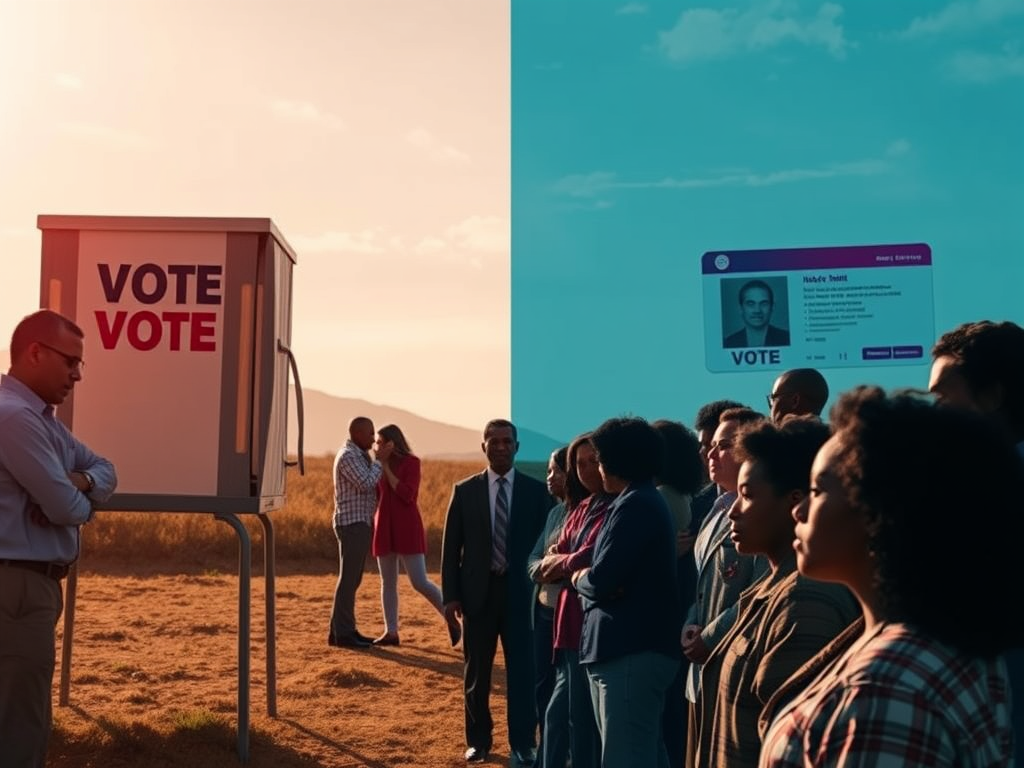
The debate over voter ID laws centers on one key tension: protecting election integrity while preserving broad access to voting. Below is a balanced look at both sides, followed by a practical analysis of what may best uphold both security and fairness.
The Case For Voter ID Laws
1. Preventing Voter Fraud
Supporters argue that requiring identification helps prevent impersonation fraud (someone pretending to be another voter). Even if rare, they contend elections should be safeguarded the way banks or airports are.
Example: States like Georgia and Indiana have long required photo ID for in-person voting and argue it strengthens verification procedures.
2. Increasing Public Confidence
Public trust is essential in a democracy. Even if fraud is uncommon, some argue that ID requirements reassure voters that elections are secure.
After the disputed 2020 presidential election involving Donald Trump and Joe Biden, confidence in election integrity became a major political issue, particularly among Republican voters.
3. ID Is Common in Daily Life
Supporters note that ID is required for many everyday activities (boarding flights, opening bank accounts, purchasing certain goods). They argue voting—a civic act of great importance—should meet a similar standard.
The Case Against Voter ID Laws
1. Voter Fraud Is Extremely Rare
Opponents argue that in-person voter impersonation—the type voter ID laws address—is statistically rare. Studies and investigations across multiple election cycles have allegedly found few proven cases.
2. Disproportionate Impact
Critics argue strict photo ID laws disproportionately affect:
- Low-income individuals
- Elderly voters
- Rural residents
- Minority communities
Obtaining government-issued ID may require transportation, documentation (like birth certificates), fees, or time off work.
3. Risk of Voter Suppression
Opponents argue that even small barriers can discourage participation. Historically, policies framed as “election integrity” measures have sometimes been used to restrict voting access.
The Supreme Court case Shelby County v. Holder, which weakened federal oversight of certain states’ election laws, intensified debate over whether states might implement restrictive voting measures without sufficient federal review.
What Actually Makes Sense?
The key question is not simply ID or no ID, but:
How do we ensure both security and access?
A balanced approach could include:
1. Free and Easily Accessible IDs
If ID is required, states should:
- Provide them free of charge
- Offer mobile ID services in rural areas
- Allow multiple forms of ID (not just driver’s licenses)
2. Backup Verification Methods
Allow alternatives such as:
- Signed affidavits under penalty of perjury
- Utility bills or government documents
- Signature matching (already used widely in mail-in voting)
3. Strong Election Administration
Integrity involves more than ID:
- Accurate voter rolls
- Transparent ballot counting
- Bipartisan oversight
- Secure mail voting systems
States like Colorado and Oregon conduct elections primarily by mail with robust verification processes and report high participation and security.
What Best Upholds Election Integrity?
True election integrity rests on three pillars:
- Security – Safeguards against fraud
- Access – Every eligible citizen can reasonably vote
- Legitimacy – Public trust in outcomes
A rigid ID requirement without broad access can undermine legitimacy by discouraging participation.
No safeguards at all can undermine legitimacy by eroding confidence.
A Reasonable Middle Ground
The most defensible approach appears to be:
- Require ID for in-person voting
- Provide free, widely accessible IDs
- Allow reasonable alternatives
- Maintain strong oversight and transparency
This balances prevention of fraud (even if rare) with protection against disenfranchisement.
Final Thought
The strongest election system is not merely the most restrictive or the most permissive. It is the one that:
- Makes it easy to vote legally
- Makes it hard to cheat
- Makes it difficult to doubt the outcome
When policy advances all three goals simultaneously, it best upholds both democracy and election integrity.
