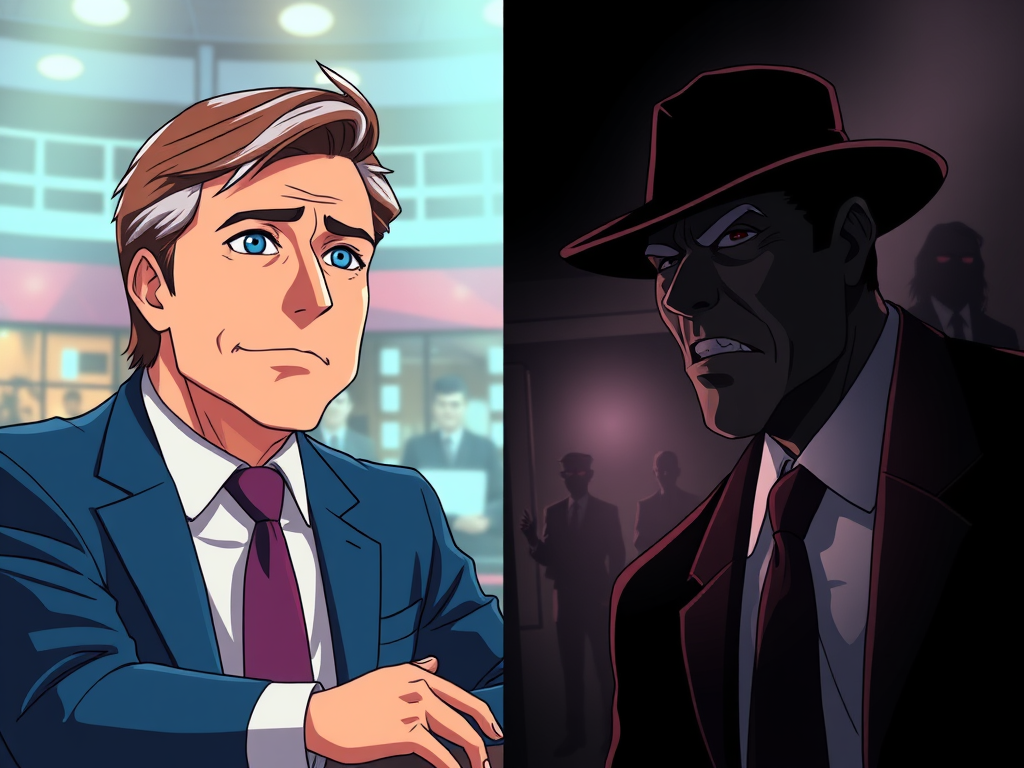
Introduction: When a Voice Feels Like a Lifeline
There was a season when Tucker Carlson felt indispensable to me. In a media world that often seemed chaotic, polarized, and performative, he projected a kind of clarity that cut through the fog. His monologues were sharp, confident, and delivered with the cadence of someone who had already done the thinking for you. For a while, that was comforting. I didn’t just watch him—I relied on him.
But influence is rarely obvious when you’re under its spell. And over time, the voice that once felt like a lifeline began to feel like a leash.
This essay is not an indictment of Tucker Carlson as a person, nor a defense of any particular ideology. It’s my take and reflection on how media shapes us, how personalities become proxies for truth, and how easy it is to confuse feeling informed with actually being informed. It’s also the story of how I stepped out of that dynamic—and what I learned about myself in the process.
The Rise — Why Tucker’s Voice Resonated
1. A Cultural Moment Ripe for Certainty
Tucker Carlson rose to prominence during a period when many people felt unmoored. Institutions were losing trust. Social media was amplifying outrage. Traditional journalism was struggling to adapt. In that environment, a commentator who spoke with unwavering certainty felt like an anchor.
He didn’t hedge. He didn’t soften. He didn’t apologize for his framing. And in a world of “both-sides-ism,” that felt refreshing.
2. The Appeal of the Outsider Persona
Even while hosting one of the most-watched cable news shows in America, Tucker cultivated the persona of an outsider—someone fighting against elites, institutions, and hidden agendas. That narrative is powerful because it taps into a deep cultural longing: the desire to believe someone is finally telling the truth others are too afraid to say.
For viewers like me, that persona created a sense of camaraderie. It felt like he was on our side.
3. The Emotional Architecture of His Monologues
Tucker’s rhetorical style is deceptively simple:
- Start with a relatable frustration
- Introduce a villain
- Offer a narrative that explains the chaos
- End with a punchline that feels like revelation
It’s a formula designed to create emotional coherence in a world that often feels incoherent. And for a while, I found that deeply satisfying.
The Shift — When Insight Became Performance
1. The Slow Creep of Outrage as Entertainment
Cable news thrives on attention, and attention thrives on outrage. Over time, I began to notice that the emotional temperature of Tucker’s show kept rising. What began as sharp critique gradually morphed into something more theatrical—more combative, more suspicious, more absolute.
The line between analysis and entertainment blurred, and the outrage became the product.
2. Certainty Without Accountability
One of the first cracks in my trust came when I realized how rarely Tucker acknowledged complexity. Issues with layers were flattened into binaries. Nuance was treated as weakness. Doubt was framed as complicity.
The world is rarely that simple. But his framing made it feel that way—and that’s precisely why it was so compelling.
3. The Echo Chamber Effect
When you watch a commentator consistently, their voice becomes part of your internal monologue. I didn’t notice it at first, but I began adopting his tone—skeptical, cynical, suspicious of motives. It wasn’t that he told me what to think; it was that he shaped how I thought.
That’s the subtle power of media personalities: they don’t just inform you; they form you.
The Fall — Why I Finally Stepped Away
1. The Moment of Disillusionment
There wasn’t a single breaking point. It was more like erosion. A growing sense that the clarity I once admired was becoming a cage. I started checking his claims against other sources. I noticed contradictions. I noticed selective framing. I noticed how often the narrative required a villain, even when reality didn’t.
Eventually, I realized I wasn’t watching to be informed anymore—I was watching to feel validated.
2. Recognizing the Emotional Dependency
This was the hardest part to admit: I had become emotionally attached to the worldview he offered. It gave me a sense of order, a sense of being “in the know,” a sense of belonging to a group that saw through the illusions.
Letting go of that felt like losing a part of my identity.
3. The Freedom of Stepping Back
When I finally stepped away, the silence was startling. Without the nightly monologue shaping my emotional landscape, I began to think more independently. I rediscovered nuance. I became more curious, less reactive. I started listening to voices I had previously dismissed.
It wasn’t just a shift in media consumption—it was a shift in posture toward the world.
What This Says About Us — And About Media Today
1. The Power of Personality-Driven News
Tucker Carlson is not an anomaly; he’s a symptom of a larger trend. Modern media increasingly revolves around personalities rather than reporting. We don’t just consume information—we attach ourselves to interpreters of information.
That’s not inherently bad, but it’s dangerous when we stop questioning the interpreter.
2. Outrage as a Business Model
Media companies—across the political spectrum—profit from emotional engagement. Outrage is sticky. Fear is addictive. Certainty is comforting. When those incentives drive content, the result is not journalism but emotional engineering.
Tucker mastered that system. But he didn’t create it.
3. The Responsibility of Viewers
It’s easy to blame media figures for polarization, but viewers play a role too. We gravitate toward voices that affirm our worldview. We reward simplicity over complexity. We choose narratives that make us feel righteous, informed, or superior.
My journey away from Tucker forced me to confront my own biases, not just his.
Conclusion: What I Learned by Letting Go
Stepping away from Tucker Carlson wasn’t about rejecting a political ideology. It was about reclaiming my ability to think without someone else’s voice narrating the world for me.
I learned that:
- certainty is seductive
- outrage feels like clarity
- media personalities can shape us more than we realize
- and stepping back creates space for nuance, humility, and genuine understanding
I don’t regret the years I spent watching him. They taught me something important about how influence works—and how easily it can feel like truth.
But I’m grateful for the distance now. It’s quieter here. And in the quiet, I can finally hear myself think.