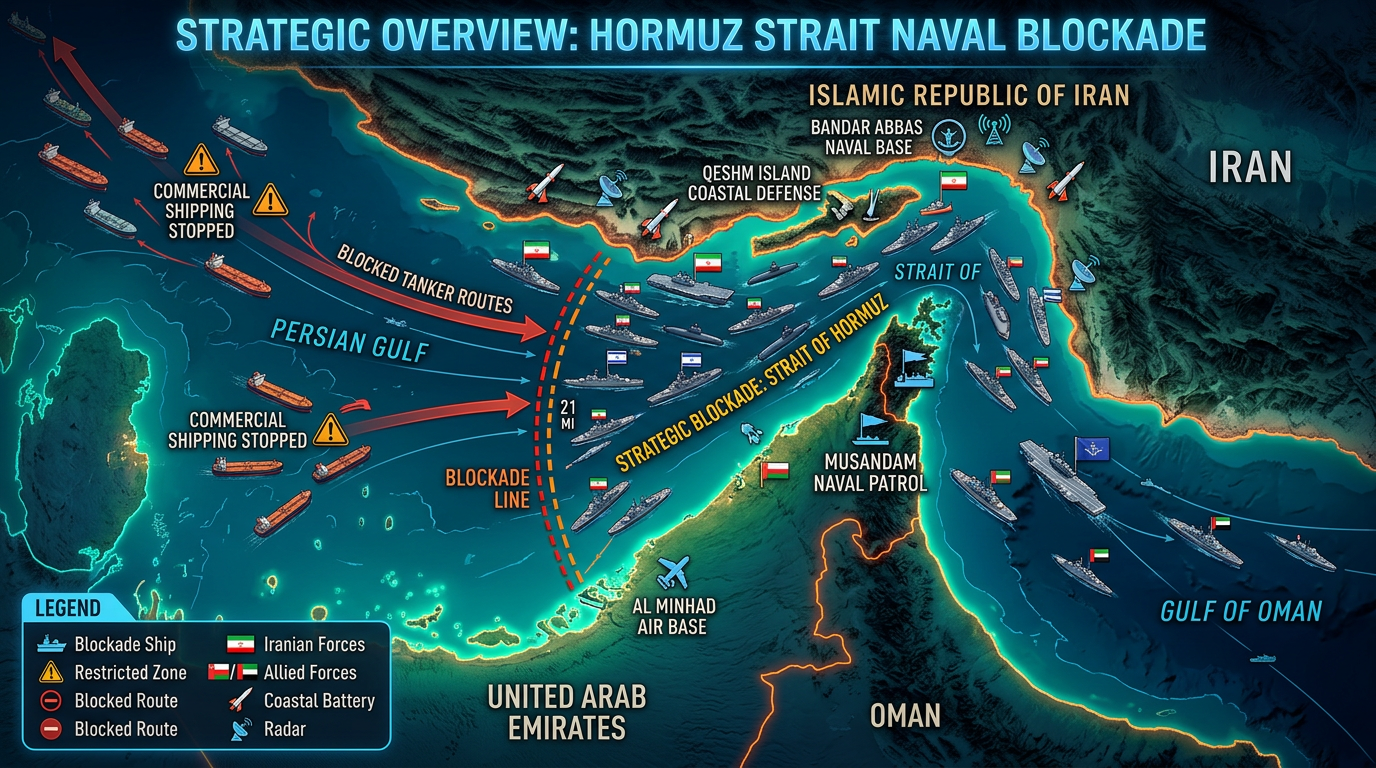
The American blockade is perceived as a success because there is no military retaliation from Iran. Was American strategy to decimate Iranian Navy and Airforce first, so that Iran would be impotent once the Americans impose the blockade?
WHAT HAPPENED BEFORE THE BLOCKADE
Reports make things clear: The American blockade did not occur in isolation. It followed weeks of intense U.S. and Israeli strikes on Iranian military infrastructure.
The strikes damaged “large parts of Iran’s military, political and industrial infrastructure.” They destroyed hundreds of missile/drone facilities and degraded capabilities. These efforts were to weaken Iran militarily.
But here’s the key nuance:
Iran’s military was degraded but not neutralized. It has still retained thousands of missiles and drones. Much of its capability is hidden, disperse, and underground.
WHAT THE BLOCKADE IS REALLY DESIGNED TO DO
The blockade’s primary objective is economic coercion, not battlefield dominance. It completely halted economic trade going in and out of Iran by sea. It was intended to “choke Iran’s economy and force concessions”, the ultimate of which is to get Iran to agree not to proliferate nuclear weaponry.
The blockade is a bargaining tool, not a finishing move.
WHY THERE’S (SO FAR) NO MAJOR IRANIAN RETALIATION
It’s tempting to say: “Iran can’t respond because its navy/air force were destroyed.” That’s too simplistic – and likely wrong. Maybe a more accurate explanations would be:
A. Iran avoids fighting on U.S. strengths
Iran’s doctrine has long accepted:
- It cannot win air/naval conventional war vs. the U.S.
- So it avoids direct confrontation in those domains
Instead, it relies on Missiles, Drones, Proxies and Economic disruption.
In other words: not fighting ≠ inability to fight
B. Strategic restraint (for now)
Iran may be choosing not to escalate because a direct attack on U.S. ships would escalate to massive retaliation putting Regime survival and total destruction of remaining infrastructure at risk.
So restraint can be intentional, not forced.
It is still resisting—just differently
Even under blockade:
- Iran still has the ability to:
- Launch missiles/drones
- Threaten regional targets
- Some oil exports are still slipping through via evasion tactics
So the conflict hasn’t ended—it has shifted domains.
WAS THERE A DELIBERATE “SOFTENING PHASE?”
Did the U.S. first degrade Iran’s navy/air force to make blockade safe and successful?
- Yes, the U.S. degraded overall military capacity
- But not specifically to:
- Eliminate Iran’s navy/air force as a prerequisite
- Instead, the goal was:
- Reduce risk
- Limit escalation options
- Create favorable conditions for coercion
Think of it as:
“Shape the battlefield → then apply pressure”
WHY THE BLOCKADE APPEARS “SUCCESSFUL”
Right now, it looks effective because ships are turning back; trade is disrupted; and, no direct naval battles have occurred.
But that can be misleading.
It’s “working” because:
- The U.S. has overwhelming naval/air superiority
- Iran is choosing asymmetric restraint (for now)
It’s fragile because:
- Iran still has escalation options:
- Missile strikes on bases
- Proxy attacks
- Mining sea lanes
- A single incident could escalate rapidly
U.S. strategy
The strategy appears to look like this:
-Degrade Iran’s military and infrastructure
-Avoid full-scale war
-Impose economic strangulation (blockade)
-Force negotiation under pressure.