There’s a quiet mercy in the way God makes Himself known. He doesn’t hide behind mystery or demand impossible searches. Instead, He reveals Himself through the world we see, the conscience we feel, the Scriptures we read, the history we live, and the Christ who walks beside us.
Paul’s words in Romans 1:20—“man is without excuse”—aren’t meant to condemn. They remind us that God has already spoken, already shown Himself, already drawn near.
🌅 1. Creation: The World as God’s First Witness
Every sunrise is a sermon. Every star is a testimony. Creation is God’s first language—universal, constant, and beautiful. When we pause long enough to notice, the world itself whispers: “He is here.”
🔥 2. Conscience: The Whisper Within
Deep inside, we carry a moral compass—a quiet echo of God’s voice. Conscience is His revelation within us, reminding us that we are made in His image. Even when we wander, that inner voice calls us home.
📖 3. Scripture: God Speaking in Words
In Scripture, God bends low to speak in human language. He tells us who He is, what He desires, and how He loves. Every verse is an invitation to know His heart more deeply.
🌍 4. History: God’s Hand in Our Story
History is not random. It is the theater of God’s faithfulness—His acts of rescue, redemption, and renewal. Even our own stories carry traces of His presence if we look closely enough.
✨ 5. Jesus Christ: God Revealed Face‑to‑Face
In Jesus, the invisible becomes visible. He is the clearest picture of the Father’s heart—compassionate, humble, and near. To know Christ is to know God Himself.
🔥 6. The Holy Spirit: God Revealing Himself Today
The Spirit continues God’s revelation in the present tense. He comforts, convicts, and guides. He turns knowledge into encounter and truth into transformation.
🌿 7. The Church: God Revealing Himself Through His People
Through worship, compassion, and community, the church carries God’s presence into the world. Imperfect though we are, we remain His chosen vessel of grace.
💫 A Closing Thought
God has not hidden Himself. He has written His presence into creation, conscience, Scripture, history, Christ, the Spirit, and the church. He is not far. He is not silent. He is not hidden. He is the God who reveals Himself—and invites us to respond.
For years, Thomas Massie built a reputation as one of the most principled conservatives in Congress — a libertarian-minded constitutionalist willing to challenge both Republicans and Democrats alike. His opposition to government spending, foreign intervention, and federal overreach earned him credibility among grassroots conservatives and early anti-establishment voters.
But in today’s Republican Party, principle alone is not always enough to maintain influence.
Massie’s increasingly hardline opposition to Donald Trump and Trump-aligned Republicans may represent a major political miscalculation.
From Tea Party Conservatism to Trump Populism
Massie appears to operate from a traditional constitutional conservative framework:
ideological consistency,
limited government,
fiscal restraint,
and individual liberty.
However, MAGA evolved into something broader and more personal around Trump himself:
populist nationalism,
political combativeness,
coalition loyalty,
and anti-establishment unity.
This shift changed the rules of influence inside the Republican movement. In the MAGA era, repeatedly opposing Trump is often viewed less as “principled independence” and more as weakening the broader populist coalition.
Opposition That Risks Isolation
Massie’s frequent resistance to spending bills, military actions, and Trump-backed compromises may be philosophically consistent, but politically costly.
Many Trump supporters prioritize:
winning political battles,
consolidating power,
and confronting entrenched institutions.
Massie prioritizes constitutional purity, even if it places him at odds with his own party.
That difference has increasingly isolated him within core MAGA circles.
The “Epstein Administration” Controversy
Massie’s use of rhetoric linking Trump’s administration to the Jeffrey Epstein scandal controversy may have further damaged his standing among Trump loyalists.
Even if intended as criticism of transparency or elite corruption, such language risks:
echoing anti-Trump narratives,
alienating MAGA voters,
and reinforcing perceptions that he is aiding Trump’s opponents.
In modern politics, perception often outweighs nuance.
Aligning With Democrats — Principle or Political Risk?
Massie has occasionally aligned with Democrats on issues involving:
surveillance,
war powers,
civil liberties,
and federal authority.
To supporters, this proves integrity:
He votes by principle, not party.
To critics, it creates the image of a Republican willing to side with Democrats during crucial political fights.
In today’s highly polarized environment, that perception carries consequences.
The Central Miscalculation
Massie’s biggest political mistake may not be ideological inconsistency — in fact, he is remarkably consistent.
The deeper issue may be that he misread what MAGA ultimately became.
He appears to believe constitutional conservatism is still the movement’s central organizing force. But for many Trump supporters, the movement is now primarily about unified populist resistance against political, media, and cultural institutions.
Within that framework, constant internal opposition can quickly reduce influence.
Final Thoughts
Thomas Massie may eventually be vindicated historically on issues such as debt, civil liberties, and executive overreach. But historical vindication does not always translate into present political power.
His confrontations with Donald Trump, controversial rhetoric, and growing distance from the MAGA base may have significantly weakened his influence inside the modern Republican coalition.
The larger question is whether the Republican Party after Trump will return to Massie-style constitutional conservatism — or continue down the path of populist loyalty politics.
Chinese President Xi Jinping saying that the United States and China should treat each other “not as rivals but partners” is both a diplomatic message and a strategic warning. It reflects how Beijing views the current state of U.S.-China relations: dangerously competitive, economically intertwined, and globally consequential.
At the center of Xi’s message is a rejection of the “zero-sum” framework increasingly used in Washington, where China is often described as America’s principal geopolitical competitor. Xi’s argument is that rivalry between the world’s two largest powers risks creating a self-fulfilling cycle of hostility. He specifically referenced the “Thucydides Trap” — the historical pattern where rising powers and established powers drift toward conflict.
What Xi Is Really Saying
Xi’s speech carries several layers of meaning:
Economic Interdependence Makes Full Confrontation Dangerous
China and the United States remain deeply economically connected despite tariffs, sanctions, and “decoupling” efforts.
The U.S. still depends heavily on Chinese manufacturing capacity.
China still relies on access to global markets, advanced technology, and dollar-based finance.
Global supply chains, energy markets, and financial systems would be severely disrupted by open confrontation.
Xi’s phrase “both stand to gain from cooperation and lose from confrontation” reflects this reality.
Beijing understands that a Cold War-style rupture would hurt China’s economy significantly. At the same time, it believes America would also pay a steep price through inflation, supply-chain instability, and weakened global influence.
So Xi’s speech is partly pragmatic economics.
China Wants Strategic Respect, Not Containment
China interprets many U.S. policies as attempts to contain its rise:
semiconductor export controls,
military alliances in the Indo-Pacific,
support for Taiwan,
restrictions on Chinese firms,
naval presence in the South China Sea.
Meanwhile, the U.S. argues these are defensive measures responding to:
cyber espionage,
military expansion,
coercive trade practices,
human-rights concerns,
pressure on Taiwan.
Xi’s call for “mutual respect” is effectively Beijing saying:
Accept China as a permanent great power rather than trying to slow or isolate it.
This is why Xi consistently frames the relationship as one where “success in one is an opportunity for the other.”
China Is Positioning Itself as the Responsible Stabilizer
An important strategic element of Xi’s rhetoric is global optics.
China increasingly presents itself to:
developing nations,
Global South countries,
non-aligned states,
business communities,
as the side favoring stability and cooperation, while portraying the U.S. as overly confrontational.
This messaging is particularly aimed at:
ASEAN countries,
Africa,
Latin America,
Middle Eastern states,
European allies uneasy about a new Cold War.
Xi’s language about “providing greater stability for the world” reflects China’s attempt to occupy the diplomatic high ground.
The American Perspective
From Washington’s viewpoint, however, the relationship cannot simply be “partnership.”
Many U.S. policymakers believe China:
seeks technological dominance,
uses state-directed economic practices unfairly,
militarizes disputed territories,
suppresses dissent internally,
pressures Taiwan,
and aims to reshape the international order in ways unfavorable to liberal democracies.
That is why modern U.S. strategy often uses the phrase:
“Compete where we must, cooperate where we can.”
The United States increasingly views China not merely as a trading partner but as a systemic rival.
This creates the central tension:
China’s View
America’s View
Competition should be limited and managed
Competition is unavoidable
Mutual prosperity is possible
China seeks strategic advantage
U.S. containment creates instability
Chinese expansion creates instability
Taiwan is a core sovereignty issue
Taiwan security is tied to regional stability
The Taiwan Factor: The Most Dangerous Flashpoint
Even while speaking about partnership, Xi warned about Taiwan.
This reveals the contradiction in U.S.-China relations:
economically intertwined,
diplomatically engaged,
militarily suspicious.
Taiwan remains the issue most likely to trigger crisis because:
China sees reunification as historically non-negotiable,
the U.S. maintains strategic ambiguity but supports Taiwan militarily,
both sides increasingly operate military assets in close proximity.
Thus, even if both governments avoid outright hostility, structural tensions remain very high.
Is Xi Being Genuine or Strategic?
The answer is likely both.
Xi genuinely appears to believe catastrophic conflict between the U.S. and China would damage both countries and destabilize the world.
But his rhetoric is also strategic:
reducing pressure on China’s slowing economy,
preventing formation of a stronger anti-China coalition,
reassuring markets and investors,
buying time for technological and military development,
shaping international opinion.
In geopolitics, calls for “partnership” often coexist with long-term competition.
The United States and China are simultaneously:
trading partners,
technological competitors,
military rivals,
diplomatic negotiators,
and global co-managers.
That complexity is why Xi’s framing matters.
The Deeper Reality: Neither Full Partnership nor Full Cold War
The most realistic interpretation of current U.S.-China relations is:
strategic competition under conditions of deep interdependence.
Unlike the U.S.-Soviet Cold War:
the economies are deeply connected,
businesses are intertwined,
financial systems overlap,
supply chains are globalized.
But unlike a normal partnership:
both sides are preparing for prolonged strategic competition,
military modernization is accelerating,
distrust is growing,
AI and semiconductor races are intensifying,
regional alliances are hardening.
So Xi’s statement is less a description of reality than an attempt to shape it.
Bottom Line
Xi’s appeal for the U.S. and China to be “partners, not rivals” reflects:
a desire to prevent uncontrolled escalation,
China’s push for recognition as an equal superpower,
concern over economic fragmentation,
and an effort to stabilize relations without surrendering Chinese strategic ambitions.
However, the relationship today is fundamentally characterized by:
cooperation in some areas,
competition in many areas,
and mistrust in the most critical areas.
The future of U.S.-China relations will likely depend on whether both countries can maintain competition without allowing it to evolve into open confrontation — especially over Taiwan, technology, and military influence in the Indo-Pacific.
In view of what’s buzzing online about Jimmy Kimmel, Melania Trump, and the Media, here’s MY TAKE on it:
The tension between freedom of expression, humor, and responsibility isn’t a contradiction—it’s a balancing act. You can harmonize them by understanding what each one is for and where each one reaches its limits.
The First Amendment: Protection, Not Permission Without Consequence
The First Amendment (in the U.S. context) protects you from government punishment for most forms of speech. It ensures that ideas—popular or offensive—can circulate without state censorship.
But it does not guarantee freedom from criticism, social consequences, and moral evaluation.
So the starting point is this: you have the right to speak—but not the right to insult or be insulated from the effects of what you say.
Jokes: A Special Form of Speech With Real Impact
Humor often gets treated as “harmless,” but that’s not quite accurate. Jokes:
Shape norms (what is considered acceptable)
Reinforce or challenge stereotypes
Can either build connection or deepen division
A joke works because it plays with shared assumptions. That’s exactly why it can also wound—especially when it targets identity, trauma, or marginalized groups.
So while humor enjoys broad protection legally, it carries amplified social power.
Responsibility: The Missing Bridge
Responsibility is what harmonizes freedom and impact. It asks:
What am I trying to achieve with this speech?
Who is likely to be affected—and how?
Is the humor punching up, punching down, or just punching randomly?
A useful distinction:
Punching up (satirizing power, hypocrisy) → often socially constructive
Punching down (mocking vulnerability) → often socially corrosive
Responsibility doesn’t mean silence—it means intentionality.
A Practical Framework for Balance
You can think of it as three layers:
Legal Layer (Can I say this?) → Usually yes, under free speech protections.
Social Layer (How will people respond?) → Depends on context, audience, and content.
Moral Layer (Should I say this?) → Depends on empathy, purpose, and wisdom.
Healthy discourse happens when all three are considered—not just the first.
The Real Harmonization
The strongest version of free speech culture isn’t one where people say anything without restraint. It’s one where:
People can speak freely
People choose to speak thoughtfully and responsibly
Society allows disagreement without coercion
In that sense, responsibility doesn’t weaken free speech—it actually sustains it. When people feel constantly harmed by speech, they start demanding restrictions. Responsible use of freedom helps prevent that cycle.
Bottom Line
Freedom of speech gives you the space to speak. Humor gives you the tool to express. Responsibility gives you the wisdom to use both well.
Without responsibility, freedom becomes reckless. Without freedom, responsibility becomes forced.
The balance is voluntary restraint guided by awareness—not imposed silence.
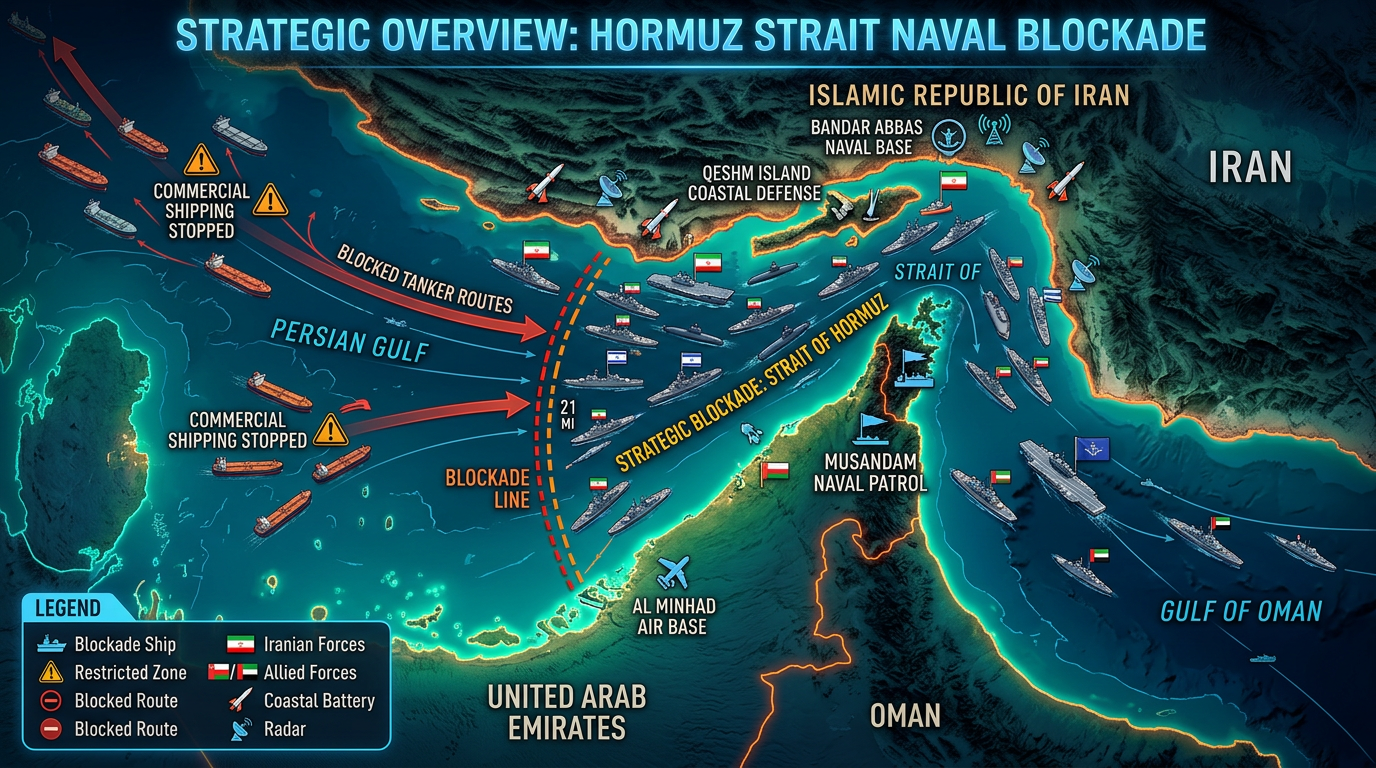
The American blockade is perceived as a success because there is no military retaliation from Iran. Was American strategy to decimate Iranian Navy and Airforce first, so that Iran would be impotent once the Americans impose the blockade?
WHAT HAPPENED BEFORE THE BLOCKADE
Reports make things clear: The American blockade did not occur in isolation. It followed weeks of intense U.S. and Israeli strikes on Iranian military infrastructure.
The strikes damaged “large parts of Iran’s military, political and industrial infrastructure.” They destroyed hundreds of missile/drone facilities and degraded capabilities. These efforts were to weaken Iran militarily.
But here’s the key nuance:
Iran’s military was degraded but not neutralized. It has still retained thousands of missiles and drones. Much of its capability is hidden, disperse, and underground.
WHAT THE BLOCKADE IS REALLY DESIGNED TO DO
The blockade’s primary objective is economic coercion, not battlefield dominance. It completely halted economic trade going in and out of Iran by sea. It was intended to “choke Iran’s economy and force concessions”, the ultimate of which is to get Iran to agree not to proliferate nuclear weaponry.
The blockade is a bargaining tool, not a finishing move.
WHY THERE’S (SO FAR) NO MAJOR IRANIAN RETALIATION
It’s tempting to say: “Iran can’t respond because its navy/air force were destroyed.” That’s too simplistic – and likely wrong. Maybe a more accurate explanations would be:
A. Iran avoids fighting on U.S. strengths
Iran’s doctrine has long accepted:
It cannot win air/naval conventional war vs. the U.S.
So it avoids direct confrontation in those domains
Instead, it relies on Missiles, Drones, Proxies and Economic disruption.
In other words: not fighting ≠ inability to fight
B. Strategic restraint (for now)
Iran may be choosing not to escalate because a direct attack on U.S. ships would escalate to massive retaliation putting Regime survival and total destruction of remaining infrastructure at risk.
So restraint can be intentional, not forced.
It is still resisting—just differently
Even under blockade:
Iran still has the ability to:
Launch missiles/drones
Threaten regional targets
Some oil exports are still slipping through via evasion tactics
So the conflict hasn’t ended—it has shifted domains.
WAS THERE A DELIBERATE “SOFTENING PHASE?”
Did the U.S. first degrade Iran’s navy/air force to make blockade safe and successful?
Yes, the U.S. degraded overall military capacity
But not specifically to:
Eliminate Iran’s navy/air force as a prerequisite
Instead, the goal was:
Reduce risk
Limit escalation options
Create favorable conditions for coercion
Think of it as:
“Shape the battlefield → then apply pressure”
WHY THE BLOCKADE APPEARS “SUCCESSFUL”
Right now, it looks effective because ships are turning back; trade is disrupted; and, no direct naval battles have occurred.
This is one of the deepest and most important questions in Christian theology—and it has been wrestled with for centuries. At its core, it touches on the nature of God: His love, His justice, and His holiness.
Let’s walk through it carefully.
Why not “just forgive”?
At first glance, it seems simple: if God is loving, why not forgive sin outright?
The issue is that forgiveness is never truly “free” in a moral universe. Even in human experience, forgiveness always carries a cost.
If someone damages your property and you forgive them, you absorb the loss.
If someone deeply wrongs you and you choose not to retaliate, you carry the emotional cost.
Now magnify that to a cosmic level. Sin, in the biblical sense, is not just breaking rules—it is a violation of God’s holiness and moral order.
God is not only loving; He is also just. And justice means that evil cannot simply be ignored.
If God “just forgave” without addressing wrongdoing, He would cease to be just.
The tension: Love vs. Justice
This creates a tension:
Love desires to forgive and restore.
Justice demands that wrongdoing be dealt with.
Christianity’s claim is that God does not choose one over the other—He satisfies both.
Why Jesus?
Here is where the person of Jesus Christ becomes central.
The New Testament presents Jesus not merely as an innocent third party, but as:
God entering human history
God taking responsibility for human sin upon Himself
In other words:
God doesn’t punish someone else—He bears the cost Himself.
The cross as self-sacrifice, not injustice
From a surface perspective, it may seem unjust: an innocent person dying for the guilty.
But Christianity frames it differently:
Jesus willingly lays down His life
He is not separate from God’s will—He is acting in unity with it
Therefore, the cross is not divine child abuse or injustice, but divine self-giving love
“God was in Christ reconciling the world to Himself” (2 Corinthians 5:19)
Why was this necessary?
Because God chose a way to forgive that:
Upholds justice (sin is not ignored)
Demonstrates love (God absorbs the penalty Himself)
Maintains moral order (evil is taken seriously)
Think of it this way:
If God ignored sin → He becomes unjust
If God punishes all sin without mercy → He becomes unapproachable
At the cross → He remains both just and merciful
Could God have done it differently?
This is a fair philosophical question.
Some theologians argue:
God, being omnipotent, could have chosen another way.
Others argue:
This was the most fitting way to reveal both His justice and love fully.
The Bible doesn’t present the cross as one option among many—it presents it as the definitive expression of God’s character.
The deeper meaning
Ultimately, the cross is not just about solving a legal problem—it’s about relationship.